
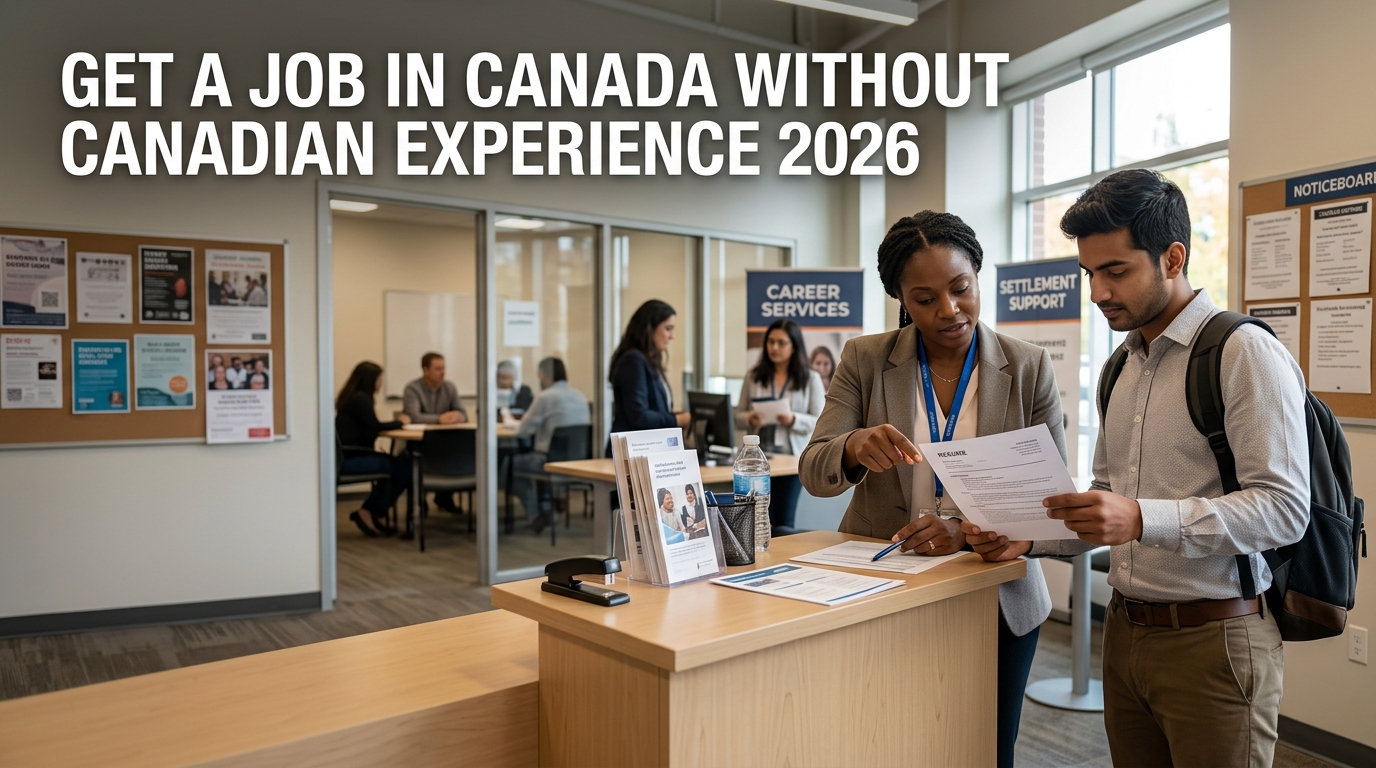
One of the most common problems newcomers face when searching for work is being told that employers prefer candidates with Canadian experience.
However, not having previous work experience in Canada does not mean you cannot build a successful career here.
The key is learning how Canadian employers hire, presenting your previous experience correctly, targeting realistic opportunities and developing evidence that you can perform the job.
This guide explains how to get a job in Canada without Canadian experience in 2026, including resume strategy, networking, Job Bank, interviews, credentials and common mistakes.
Can You Get a Job in Canada Without Canadian Experience?
Yes. Many newcomers begin their first Canadian job without previously working in Canada.
Your international experience can still be valuable when it is relevant to the position.
The challenge is usually demonstrating that your:
- Skills match the employer’s needs
- Previous responsibilities are relevant
- Qualifications are understood in Canada
- English or French communication is sufficient
- You understand the Canadian workplace
Step 1: Make Sure You Can Legally Work in Canada
Before focusing on applications, make sure you have the authorization required to work.
Job Bank notes that employers may be less likely to respond to candidates outside Canada who are not authorized to work here.
If you are already authorized to work in Canada, make that clear when appropriate during the application process.
Step 2: Use a Canadian-Style Resume
Your resume should clearly communicate your relevant experience without forcing employers to understand an unfamiliar format.
Focus on:
- Recent and relevant employment
- Achievements
- Technical skills
- Transferable skills
- Results you produced
Read our Canadian Resume Format 2026 guide.
Do Not Hide Your International Experience
Your previous experience did not become worthless when you moved to Canada.
Instead of hiding it, translate it into language Canadian employers can easily understand.
Weak Resume Statement
Responsible for customer service.
Stronger Statement
Assisted customers with product questions, resolved service issues and handled daily transactions in a high-volume retail environment.
Step 3: Tailor Every Important Application
Do not send exactly the same resume to 100 different jobs.
Compare the posting with your resume and identify important:
- Skills
- Software
- Certifications
- Responsibilities
- Industry terms
Use relevant keywords naturally when they accurately describe your experience.
Step 4: Write a Targeted Cover Letter
A cover letter gives you an opportunity to explain why your background is relevant even if your experience was gained outside Canada.
Read our Canadian Cover Letter Format 2026.
Step 5: Use Job Bank
The Government of Canada’s Job Bank provides job-search tools and specific resources for newcomers.
You can search by:
- Job title
- Location
- Salary
- Hours
- Employment type
- Other filters
There is also an option to look for postings from employers that support newcomers.
Step 6: Apply on Company Career Pages
Do not depend on one job board.
If you identify a company you would genuinely like to work for, visit its careers section and check current vacancies.
This can also help you discover positions that may not appear in the searches you normally use.
Step 7: Build a Canadian Network
Networking does not mean asking strangers to give you a job.
It means building professional relationships and learning about industries, companies and opportunities.
You can network through:
- Professional associations
- Community events
- Job fairs
- Former classmates
- Newcomer organizations
- Industry events
Step 8: Consider a Related First Job
Your first Canadian job does not have to be your permanent career.
A related role can help you develop:
- Canadian references
- Industry contacts
- Workplace familiarity
- Recent experience
- Confidence
However, avoid abandoning your long-term career goal simply because the first search is difficult.
Step 9: Check Whether Your Occupation Is Regulated
Some Canadian occupations require licensing, certification or registration.
If your profession is regulated, research the appropriate regulatory body and qualification-recognition process.
Do not assume that an overseas licence automatically allows you to perform the same regulated work in Canada.
Step 10: Improve Your Interview Stories
Canadian employers often ask behavioural questions about previous situations.
Prepare examples showing:
- Problem solving
- Teamwork
- Customer service
- Leadership
- Conflict resolution
- Adaptability
Your examples can come from international employment.
Use the STAR Method
A simple structure is:
Situation → Task → Action → Result
Focus most of your answer on what you personally did and the result.
Should You Apply When You Do Not Meet Every Requirement?
If you meet most of the important requirements and can genuinely perform the role, an application may still be worthwhile.
However, do not claim qualifications, licences or experience you do not have.
Keep an Application Tracker
| Company | Role | Date | Status | Follow-Up |
|---|---|---|---|---|
| Example Company | Support Technician | Sept 8 | Applied | Sept 15 |
Common Newcomer Job-Search Mistakes
- Using one generic resume everywhere
- Applying only through one website
- Ignoring networking
- Hiding international experience
- Applying to jobs requiring licences you do not have
- Sending hundreds of low-quality applications
- Giving up after a few rejections
- Not preparing for interviews
Related Maple Work Path Guides
- Canadian Resume Format 2026
- Canadian Cover Letter Format 2026
- Best Jobs in Canada for Newcomers 2026
- Jobs in Canada and PR Pathways 2026
Final Thoughts
Lack of Canadian experience can make the first job search more difficult, but it does not erase your previous skills and achievements.
Use a Canadian-style application, translate your international experience into clear employer-focused language, network consistently and target jobs where your actual skills match the requirements.
Your first Canadian opportunity can become the foundation for stronger references, local experience and future career growth.
Leave a Reply